Stapelianthus pilosus Care Guide
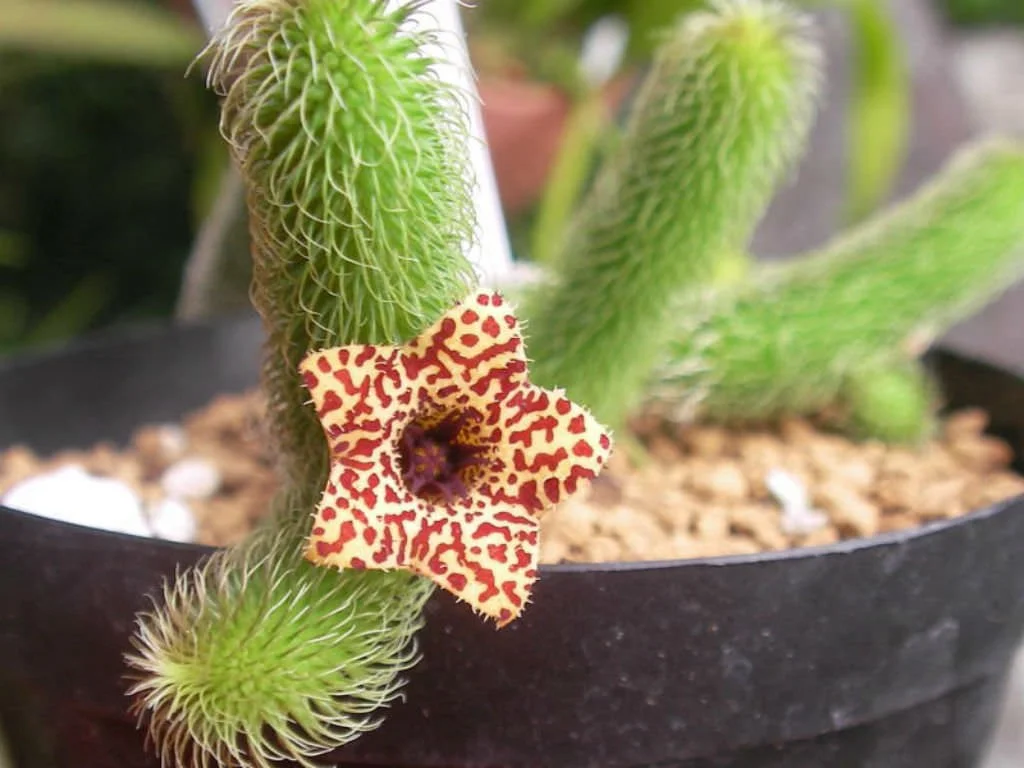
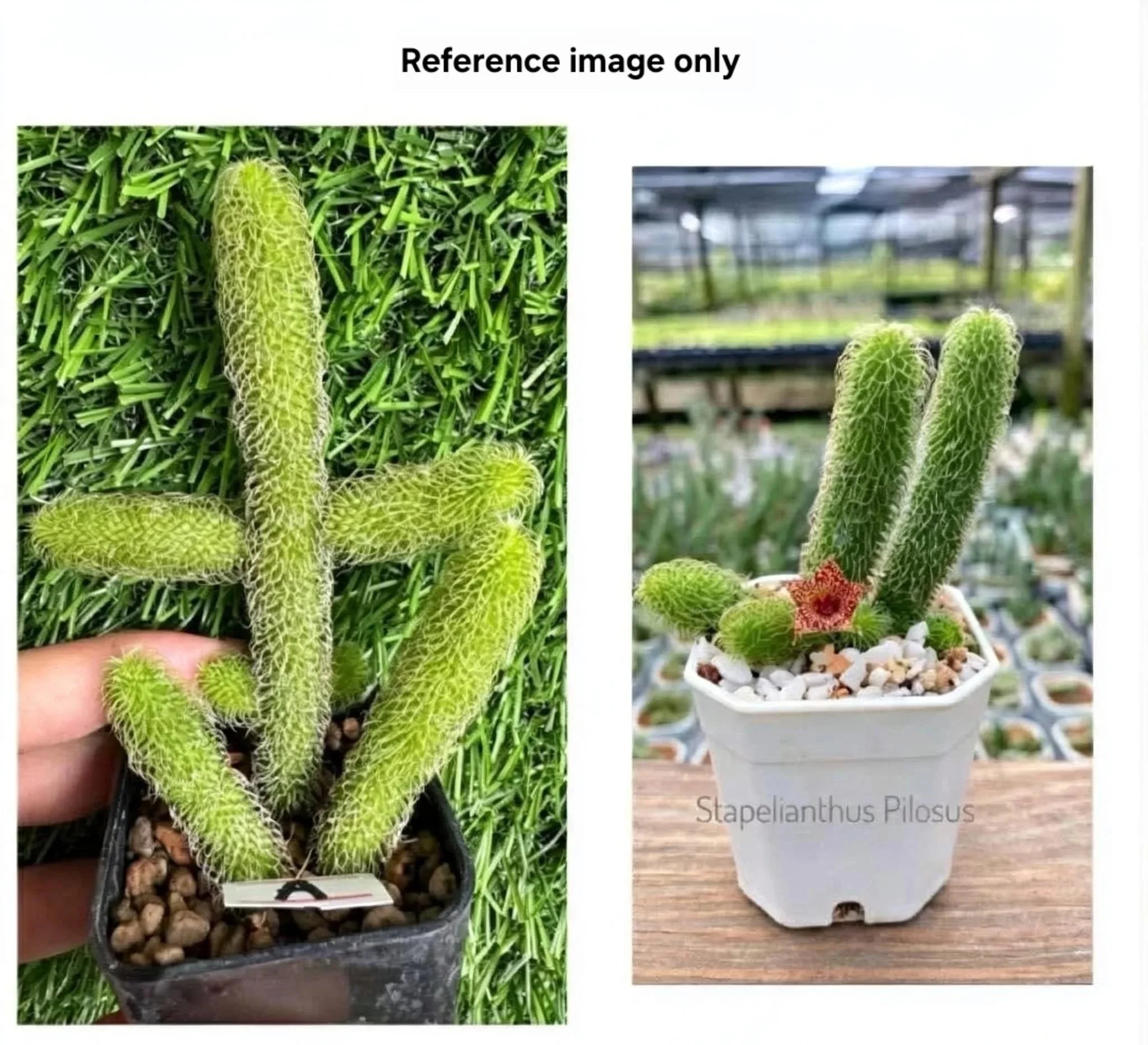
Also called Hairy Stapeliad, this unique succulent gets its name from its distinctly fuzzy, hair‑covered stems — care is similar to Huernia but with a few small differences!
☀️ Light
- Best: Bright indirect light, or soft morning sun (east/west window).
- Avoid: Strong midday direct sun — its hairy stems scorch easily, turning brown or crispy.
- Needs good light to bloom; too little light makes stems stretch thin and stops flowers forming.
💧 Watering
- Spring–Autumn: Water thoroughly only when the entire potting mix is completely dry. Let water drain fully — never let it sit in saucers.
- Winter: Keep almost dry — only give a tiny amount if stems look wrinkled/shrivelled.
- Key rule: Overwatering is the #1 killer — its thick stems store plenty of water!
🪨 Soil & Pots
- Use extra‑free‑draining mix: 60% cactus/succulent soil + 40% grit, perlite, pumice or coarse sand.
- Shallow pots work well (shallow roots); terracotta is ideal as it breathes and dries evenly.
- Always use pots with drainage holes.
🌡️ Temperature & Humidity
- Ideal: 16–28 °C (60–82 °F).
- Winter minimum: Keep above 10 °C (50 °F) — absolutely frost‑tender.
- Happy in normal room humidity; avoid damp, poorly ventilated spots.
🧪 Feeding
- Only feed spring and summer, once every 4–6 weeks.
- Use cactus fertilizer diluted to half strength.
- Never feed in autumn/winter.
✂️ Extra Tips
- Appearance: Stems are slender, bright green and covered in fine white hairs — very distinct!
- Flowers: Small, star‑shaped, brownish‑red with patterned markings, usually in late spring–summer.
- Propagation: Cut a healthy stem, let the cut end callus over for 2–3 days, then plant in dry gritty mix.
- Pests: Check stem bases for mealybugs; hairs can hide them!
- Repot: Every 1–2 years in spring.
Stapelianthus pilosus Care Guide
Also called Hairy Stapeliad, this unique succulent gets its name from its distinctly fuzzy, hair‑covered stems — care is similar to Huernia but with a few small differences!
☀️ Light
- Best: Bright indirect light, or soft morning sun (east/west window).
- Avoid: Strong midday direct sun — its hairy stems scorch easily, turning brown or crispy.
- Needs good light to bloom; too little light makes stems stretch thin and stops flowers forming.
💧 Watering
- Spring–Autumn: Water thoroughly only when the entire potting mix is completely dry. Let water drain fully — never let it sit in saucers.
- Winter: Keep almost dry — only give a tiny amount if stems look wrinkled/shrivelled.
- Key rule: Overwatering is the #1 killer — its thick stems store plenty of water!
🪨 Soil & Pots
- Use extra‑free‑draining mix: 60% cactus/succulent soil + 40% grit, perlite, pumice or coarse sand.
- Shallow pots work well (shallow roots); terracotta is ideal as it breathes and dries evenly.
- Always use pots with drainage holes.
🌡️ Temperature & Humidity
- Ideal: 16–28 °C (60–82 °F).
- Winter minimum: Keep above 10 °C (50 °F) — absolutely frost‑tender.
- Happy in normal room humidity; avoid damp, poorly ventilated spots.
🧪 Feeding
- Only feed spring and summer, once every 4–6 weeks.
- Use cactus fertilizer diluted to half strength.
- Never feed in autumn/winter.
✂️ Extra Tips
- Appearance: Stems are slender, bright green and covered in fine white hairs — very distinct!
- Flowers: Small, star‑shaped, brownish‑red with patterned markings, usually in late spring–summer.
- Propagation: Cut a healthy stem, let the cut end callus over for 2–3 days, then plant in dry gritty mix.
- Pests: Check stem bases for mealybugs; hairs can hide them!
- Repot: Every 1–2 years in spring.